





Advancing life-cycle assessment for global impact
Life-cycle assessment is entering a new phase of maturity. The merger of SimaPro into One Click LCA marks the point where rigorous science meets technological capability, aligning deep methodological expertise with automation, AI and supply chain data. Together, this signals a shift toward universal access to reliable impact data — the foundation of every credible decarbonization and sustainability strategy.
A turning point for life‑cycle assessment
Life‑cycle assessment (Ökobilanz) has quietly matured into one of the defining tools of the decarbonization era. Once the preserve of a few specialists, it is becoming a daily requirement across construction, manufacturing, and product supply chains — from chemicals, to medical equipment, to fast-moving consumer goods.
Tightening regulation, investor scrutiny, and growing customer demand for verified data are forcing the method into the mainstream.
Against this backdrop, the combination of One Click LCA and SimaPro marks a structural shift. It unites scientific depth with technological capability, offering the LCA community a platform that is both rigorous and scalable. Together, the merger promises best in class models and data for experts and faster workflows and scalability for business users — a pairing designed to meet the demands of a world in urgent need of reliable carbon and sustainability impact data.
For users, little changes overnight. SimaPro and One Click LCA remain distinct products, each optimized for different audiences, but now strengthened by shared databases, joint investment in cloud services, and aligned quality programs.
The roadmap centers on four priorities — user‑friendliness, scalability, extended capabilities, und robustness — all intended to reduce manual effort and expand access to trustworthy data. Supplier‑specific data, expanded databases, and new tools for analytics and reporting are already in motion, ensuring that both products evolve in tandem while retaining their individual strengths.
What the merger makes possible
The rationale for uniting One Click LCA and SimaPro can be summarized simply: Depth meets speed. SimaPro brings 35 years of scientific credibility and modeling precision. One Click LCA contributes technological capability, automation, regulatory alignment, und integrations with the software environments where designers, engineers, and manufacturers already work. Together, they can push LCA both deeper and faster, enabling high‑resolution modeling for experts and reasonable application for non‑specialists.
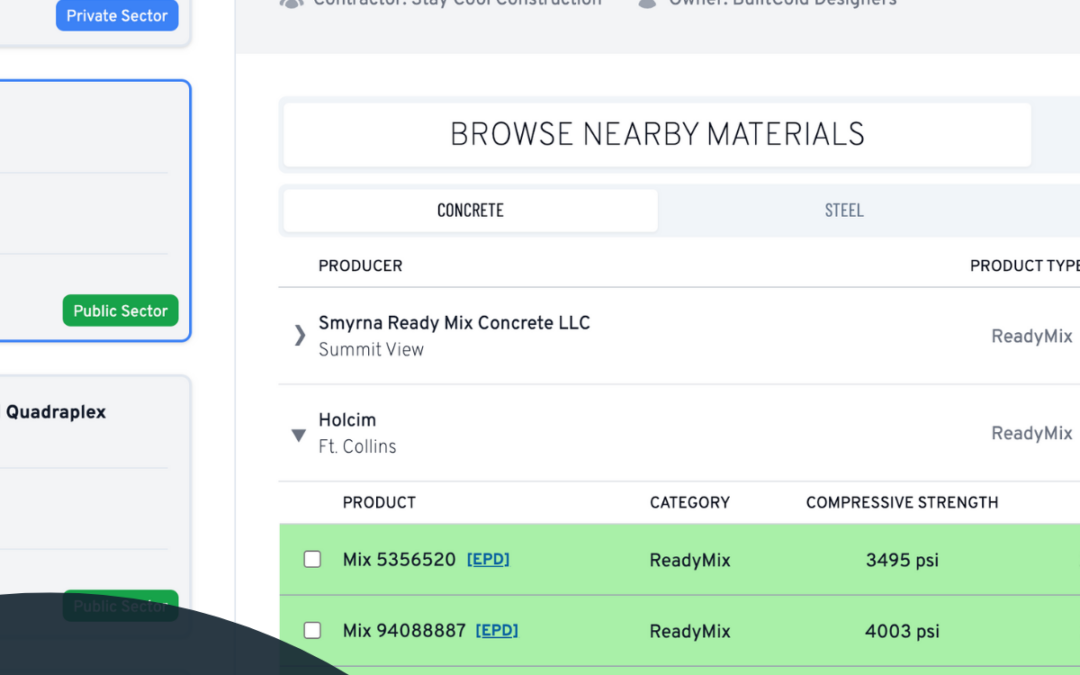
Data now flows in both directions. Components or products modelled with SimaPro can be shared as supply chain datasets for users of One Click LCA. Supplier and market data from One Click LCA can be selectively imported into SimaPro, allowing users to benefit from supply-chain specific data. Cloud‑based services will add analytics, reporting, and model‑sharing capabilities, reducing friction between research and execution.
The road ahead
The roadmap for SimaPro is anchored around four themes. First, user‑friendliness is enhanced: The interface and onboarding experience will be reworked to reduce time‑to‑value, especially for non‑expert users, while preserving the scientific core that professionals rely on. Second, scalability is improved: Automated data collection, integrations with ERP and PLM systems, and portfolio‑level reporting will be shared between SimaPro and One Click LCA. Third, extended capabilities are added: Curated sectoral databases, supplier‑specific data solutions, and new analytics will help users identify hotspots and track improvements. Finally, robustness is preserved: Harmonized methods, transparent assumptions, and strong audit trails continue to reinforce trust in results.
Our philosophy is pragmatic. Two products will connect more deeply to serve two needs: high-resolution modeling and scalable implementation. Industry networks, educational offerings, and partner relationships continue uninterrupted. Accessibility of the products remains a priority, with education licenses and affordable licenses for developing markets ensuring that the next generation of LCA experts has the best tools possible at their disposal.
What this means in practice
For design and engineering teams, the merger means earlier and faster access to sustainability impact data. Design optimization and automated reporting will help firms establish carbon budgets and meet growing compliance obligations with less administrative burden. For manufacturers, it signals a new era of data governance: Automated EPD generation, integration with enterprise systems, and structured management of supplier data. For R&D and method developers, SimaPro remains the tool of choice — the place where new methods and datasets are built — but now supported by a connected ecosystem capable of taking those models to scale. The combined platform will provide the tools, data, and services to deliver actionable carbon insights, enable compliance, and drive sustainable growth across all industries — at planetary scale.
Science and scale to drive sustainable futures
The unification of One Click LCA and SimaPro creates an ecosystem where scientific rigor and technological capability reinforce one another. For practitioners, it provides continuity. For new users, accessibility. For industry at large, a realistic path to scaling life‑cycle thinking. The aim is clear: To power one million makers of a zero‑carbon future by 2035 —by making LCA available to everyone who needs it.

Panu Pasanen, CEO and founder of One Click LCA

Panu Pasanen is the CEO and Founder of One Click LCA, the world’s leading software platform for life-cycle assessment and environmental product declaration in construction & manufacturing, founded in 2001.
Life‑cycle assessment (Ökobilanz) has quietly matured into one of the defining tools of the decarbonization era. Once the preserve of a few specialists, it is becoming a daily requirement across construction, manufacturing, and product supply chains — from chemicals, to medical equipment, to fast-moving consumer goods.