



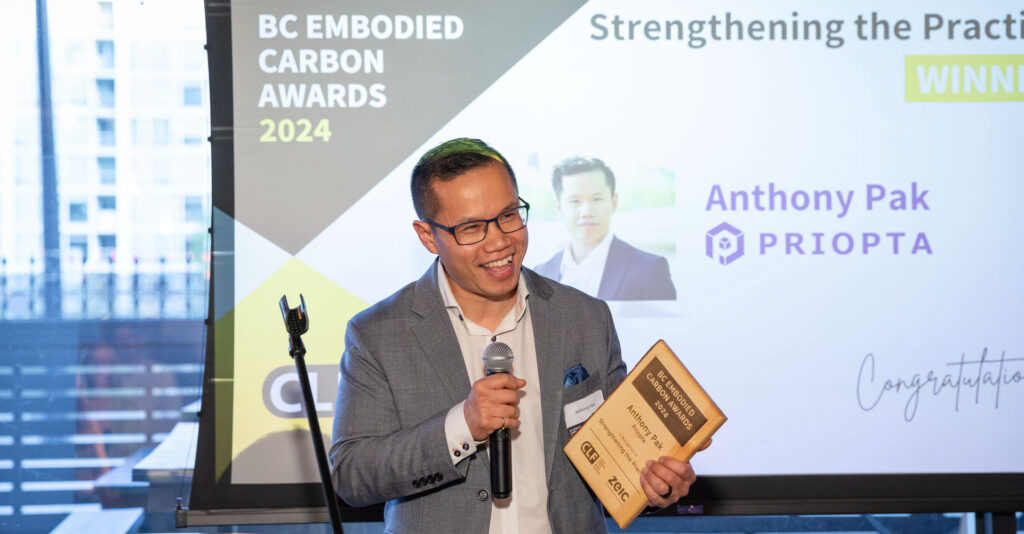
Anthony Pak presents at the 2024 BC Embodied Carbon Awards
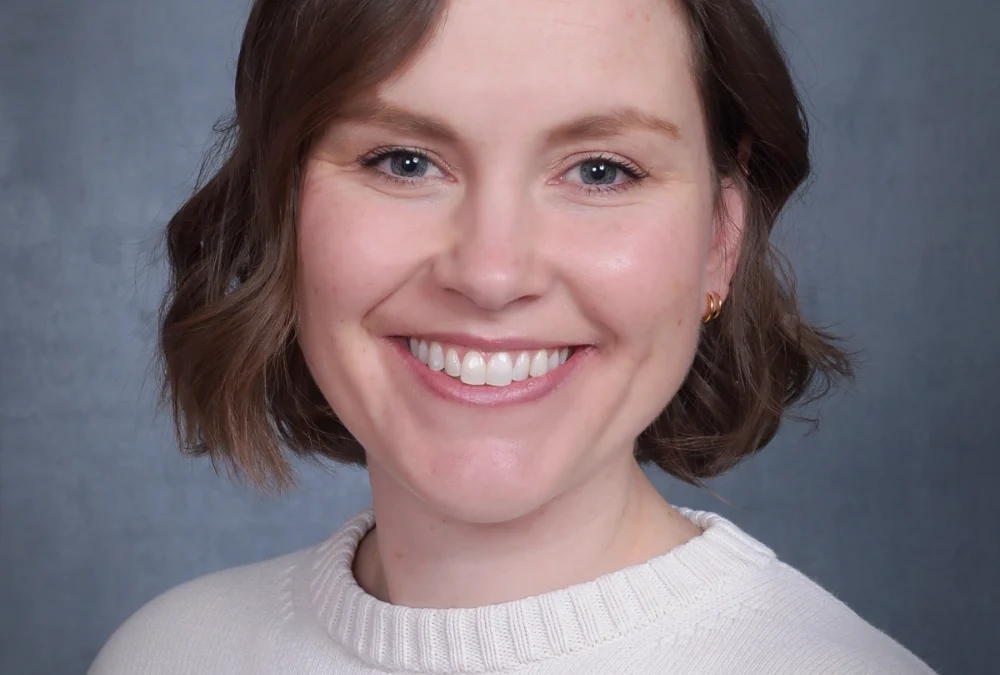
By Stephanie Dalo, Program Manager, CLF British Columbia
Thanks to the ongoing leadership of founder, Anthony Pak, the dedication of the CLF BC volunteers, the generosity of our past and current funders and event sponsors, and a growing building industry network who support our mission, what started in 2019 as Vancouver’s Embodied Carbon Network has grown to become CLF BC Regional Hub, and BC’s very own Embodied Carbon Centre of Excellence.
We had a great turnout in November this year from the building industry and local governments who joined in celebrating the fifth anniversary of Carbon Leadership Forum British Columbia, making this an event we won’t forget!
Some highlights of achievements from the last 5 years of CLF BC include:
- Organizing and hosting the second BC Embodied Carbon Awards in April to celebrate success stories and recognize the leaders and collaborators in our industry who are advancing the field of embodied carbon reduction and working towards short and long terms carbon reduction goals.
- Supporting the exploration and implementation of innovative practices and initiatives, including the Embodied Carbon Exchange and Embodied Emissions Peer Network (a.k.a., Local Government Peer Network), as well as published case studies in the spirit of knowledge sharing and continued improvement. The case studies demonstrate ambitious and achievable embodied carbon reduction targets that can be achieved today, supporting a just transition to zero carbon buildings.
- These initiatives aim to influence have played a critical role in supporting and informing the development of the Embodied Carbon Regulations for Part 3 buildings that are being proposed for the Vancouver Building Bylaw 2025 Updates in December 2024.
- Creating a Community of Practice for designers & buildings committed to reducing embodied carbon of Part 9 homes and supporting the sharing of best practices and lessons learned on projects that successfully achieved significant reductions.
- Developing the CLF BC Low Carbon Material Sourcing Guide (LCMSG) as a tool for builders and designers to support their efforts to reduce embodied carbon by choosing low-carbon alternatives to traditional building products.
- Collaborating with CaGBC and a handful of innovative and brilliant embodied carbon leaders to organize the Embodied Carbon Summit held in June 2024, where dozens of industry experts across Canada came together to explore main gaps and barriers around: (1) Policies & Standards, (2) Education and Communication, (3) Research & Application, (4) Tools and Data, and (5) Financials, to set the groundwork for developing a common vision for 2030
As we look out on the horizon, CLF BC will continue to convene industry leaders and support collaboration and innovation – with the aim of aligning & harmonizing the goals of the various actors across the building sector. This event is a celebration of how far industry has come in building the confidence and capacity to reduce embodied carbon, and we remain dedicated to supporting your future efforts and recognize how critical your involvement and engagement with our network is in steering us towards our common goals.

CLF British Columbia Volunteer Team
CLF BC will continue to support CLF’s Theory of Change: Building Community for Impact; Improving Data and Methods; and Informing Effective and Just Policy & Standards. By being a part of the Zero Emissions Innovation Centre (ZEIC) Building Decarbonization Team’s Community of Practice, CLF BC is being supported in network building and drawing the relationship between building electrification, building retrofits, embodied carbon, understanding the overlaps and ways these areas are interdependent / interconnected, to develop holistic strategies that optimize synergies so that we achieve our larger zero emission building goals. CLF BC is well positioned to support the movement from theory to action, with the main goal of creating positive impact in the built environment.
Furthermore, ZEIC and CLF BC are committed to Truth & Reconciliation with Indigenous People, and recognize the opportunity to decolonize and indigenize the building sector and continue to encourage innovation through systems, behavioural, and cultural change, as well as a mindset shift towards social innovation paradigms, such that we collectively shift away from:
- Reactive and Siloed to Systemic and Interconnected;
- Generic and Scalable to Place-based and Contextual;
- Fearful and Pragmatic to Courageous and Visionary;
- Closed, Controlling, and Competitive to Unleashed Openness and Collaboration; and
- Scarcity, Urgency, and Efficiency to Abundance and Generosity.
Lastly, we want to thank everyone who attended the celebration, and give a special shout out to the speakers and sponsors that helped make this event the success that it was:
Sprecher:
- MC – Peter Robinson, ZEIC Board Chair
- Indigenous Welcome – Alec Dan, Musqueam Indian Band (3 min)
- Melina Scholefield, ZEIC Executive Director
- COV Councillor Lisa Dominato
- Stephanie Dalo, CLF BC Program Manager
- Anthony Pak, CLF BC Founder
Event Sponsors:
- Perkins & Will
- Vema Deconstruction
- BCIT
- Glotman Simpson
- Edge Sustainability Consulting
- ZGF Architects
- Ryder Architecture
- City of Vancouver
- North Family Foundation
If you haven’t already done so, check out CLF BC’s website and subscribe to our newsletter to stay informed on upcoming Decarb Lunches, workshops, recently published case studies, and other embodied carbon news that supports knowledge sharing and capacity building across industry.
We can’t wait to see what we will achieve together over the next 5 years and look forward to the ten-year celebration!

Stephanie Dalo
CLF’s volunteer-led Regional Hubs are working to bring people together to reduce embodied carbon emissions in their communities by supporting the goals and mission of CLF at the local scale. CLF Regional Hubs are encouraged to set their own goals and priorities that align with the specific needs of each unique community.