






Back to all resources

Material Spotlights: Existing and Emerging Strategies to Decarbonize Construction Materials

This resource provides project teams with an overview of emerging processes and materials that offer viable alternatives to conventional construction products, with a focus on solutions that are commercially available but currently under-adopted. 15 spotlights provide real-world examples of implementation.

About

Meeting global climate targets will require both rapid deployment of existing low-carbon solutions and investment in emerging materials and technologies. Proven embodied-carbon reduction strategies—such as material-efficient structural design, reuse, and the use of alternative cements and supplementary cementitious materials—offer the greatest near-term decarbonization potential. However, emerging materials and technologies are expected to play an increasingly critical role between 2040 and 2050 (Ashtiani et al., 2025; Srinivas et al., 2023).

Supporting emerging solutions as they scale toward commercialization is essential to closing the emissions gap that current best practices alone cannot address. A wide range of innovations are now entering the market, from novel cements and insulation products to manufacturing approaches such as electrification and carbon capture. Commercial readiness varies by material, region, and market, but early adopters have demonstrated pathways for overcoming deployment barriers and enabling broader uptake.

This resource provides an overview of emerging materials and processes that offer viable alternatives to conventional concrete, steel, insulation, asphalt, glass, and aluminum construction products, with a focus on solutions that are commercially available but currently under-adopted. Sixteen spotlights provide real-world success stories and lessons learned.

Each section provides an overview of:

  1. Major drivers of emissions intensity
  2. Key decarbonization strategies, based on academic literature and industry reports
  3. Challenges and keys to success, based on interviews with manufacturers, contractors, engineers, architects, and sustainability consultants
  4. Spotlights highlighting success stories from real projects or facilities. 

The resource is intended for designers, specifiers, policymakers, owners, and contractors seeking lower-carbon material options but lacking the time or capacity to navigate the rapidly expanding landscape of products and data. By highlighting real-world project and facility case studies, we aim to increase awareness, build confidence, and support growing demand for lower-carbon materials.

Acknowledgments

This research was supported by the Jampart Charitable Trust. A special thank you to these individuals for conversations and feedback that informed this report. Their industry insight and expertise was invaluable:

  • Alejandra Nieto (Rockwool)
  • Alexis Feitel (Cambium Carbon)
  • Amlan Mukherjee (WAP Sustainability)
  • Anthony Dente (Verdant Structural)
  • Ashley Kreuder (Electra)
  • Bryce Tanner (Arup)
  • Charlotte Ochao (Chicago DOT)
  • Chris Magwood (RMI)
  • Cindy McLaughlin (CarbonBuilt)
  • Dan Casioppo (Electra)
  • Dirk Kestner (Walter P Moore)
  • Don Davies (Davies Crooks Associates)
  • Frances Yang (Arup)
  • James Kitchin (Mass Group)
  • Jason Todd (Timber HP)
  • Jim Little (National Ready Mixed Concrete Company)
  • Lauren Wingo (Arup)
  • Mattie Mead (Hempitecture)
  • Nandita Gettu (Chicago DOT)
  • Philippe Amsislavski (University of Alaska Anchorage and Seven Spruce)
  • Rick Church (CM Services)
  • Scott Johnston (Timber HP)
  • Scott Norris (Steelcon)

This project received additional support from other CLF staff. Brook Waldman and Jordan Palmeri assisted with calculation methodology and review. Michelle Lambert supported initial project planning and provided assistance throughout the project.

Copyright

Published under Creative Commons Attribution-ShareAlike 4.0 International (CC BY-SA 4.0)
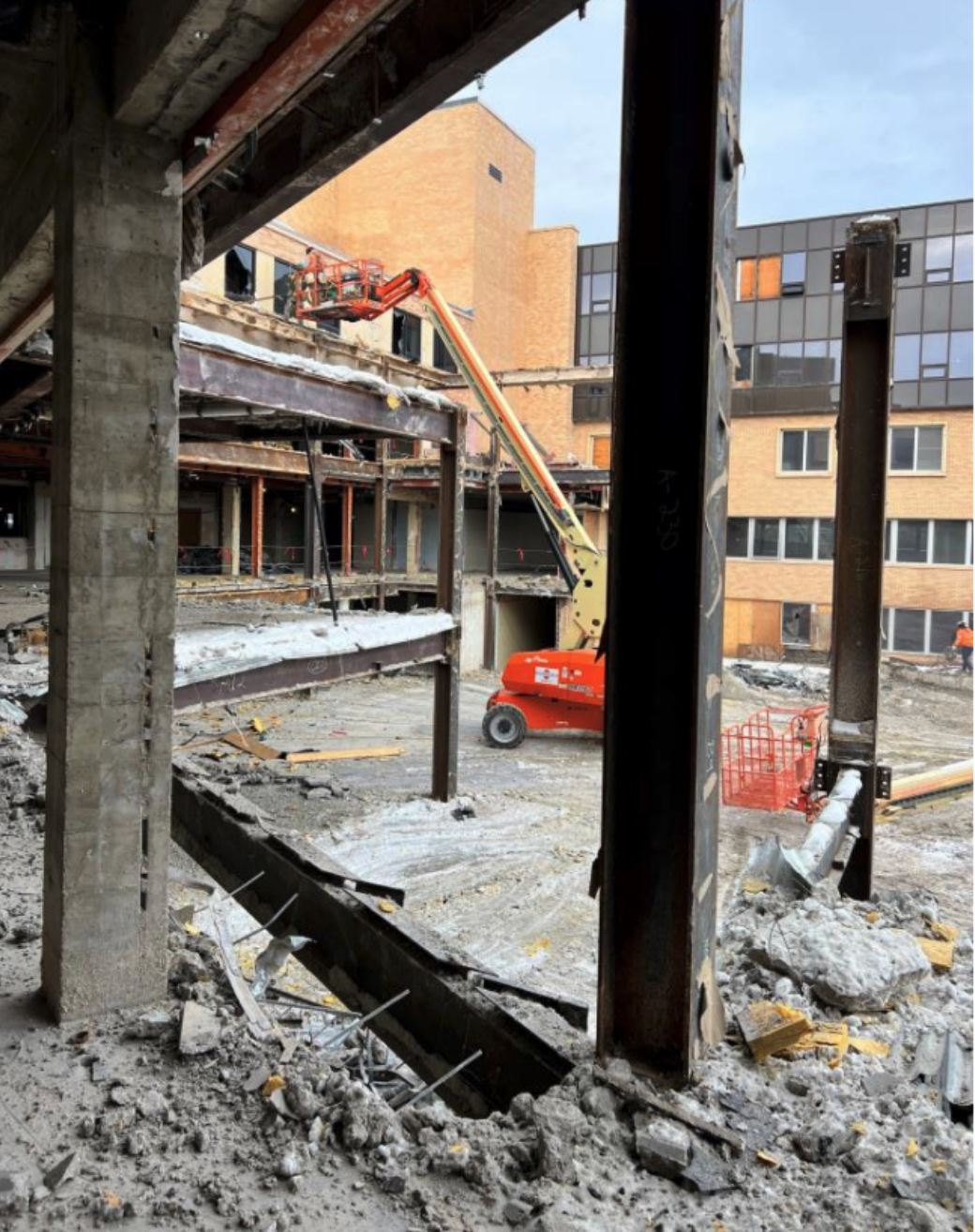
Material Spotlights: Existing and emerging strategies to decarbonize construction materials

Authors

  • Rachelle Habchi
  • Sindhu Raju
  • Meghan Lewis

Citation

Habchi, R., Raju, S., Lewis, M. (2026). Material Spotlights: Existing and emerging strategies to decarbonize construction materials. Carbon Leadership Forum.

Embodied Carbon Policy Reduction Calculator

The Policy Reduction Calculator is a web-based tool developed by the Carbon Leadership Forum to provide policymakers with data-driven insights on low embodied carbon policies in North America.

Reclaimed and Reused: Recommended LCA Modeling Guidance to Support EPDs for Reused Construction Materials

Material reuse is one strategy for reducing the embodied carbon of construction. While the preparation of previously used materials for reuse has an environmental impact, it avoids many of the resource extraction and manufacturing impacts of building with newly manufactured products. Given the amount of demolition and deconstruction across North America (and beyond), there is a vast potential for material reuse to expand in scale. However, barriers to material reuse scaling exist.

DEQ Low Embodied Carbon Housing Program: Roadmap to Success

Embodied Carbon Pathways to 2050 for the United States, a collaboration between the Carbon Leadership Forum (CLF), RMI, and the University of Washington (UW) Life Cycle Lab, provides an assessment of embodied carbon from US construction materials and explores pathways to align with a 1.5°C global warming limit.

International Embodied Carbon Data Availability: A Review of Environmental Product Declaration (EPD) Availability in Europe, China, and Australia

CLF completed a landscape analysis of product-level embodied carbon data availability in regions outside North America with the goals of: (i) understanding how LCA/EPD data availability varies globally; (ii) informing where targeted initiatives are needed to increase the availability of data; and (iii) determining whether adequate EPD data exists to develop CLF Material Baselines outside North America. This report summarizes our findings and provides initial insights into what data is available to inform low-carbon procurement efforts in Australia, China, and Europe.

The CLF Benchmark Explorer

Emissions from the operations of buildings and infrastructure are significant, well-understood contributors to national and global greenhouse gas emissions. However, the contribution of embodied carbon—emissions associated with the manufacturing, transportation, installation, maintenance, and disposal of construction materials across the life cycle of a building or asset—is neglected by comparison. Even at the global level, embodied carbon estimates are typically based on manufacturing emissions from the production of a handful of the highest-impact materials (e.g. concrete, steel, aluminum, and wood).

Embodied Carbon Pathways to 2050 for the United States

Embodied Carbon Pathways to 2050 for the United States, a collaboration between the Carbon Leadership Forum (CLF), RMI, and the University of Washington (UW) Life Cycle Lab, provides an assessment of embodied carbon from US construction materials and explores pathways to align with a 1.5°C global warming limit.

Washington State Carbon Emissions Estimation: 2025 – 2050

Emissions from the operations of buildings and infrastructure are significant, well-understood contributors to national and global greenhouse gas emissions. However, the contribution of embodied carbon—emissions associated with the manufacturing, transportation, installation, maintenance, and disposal of construction materials across the life cycle of a building or asset—is neglected by comparison. Even at the global level, embodied carbon estimates are typically based on manufacturing emissions from the production of a handful of the highest-impact materials (e.g. concrete, steel, aluminum, and wood).

2025 CLF North American Material Baselines

The CLF North American Material Baselines Report provides a snapshot of the state of environmental product declarations (EPDs) for North American-produced building materials. This report includes: Background and methodology, CLF Baselines (industry-average embodied carbon values), and a Detailed results by material category

View all policy resources in our resource library