



Low Carbon Buildings Lead
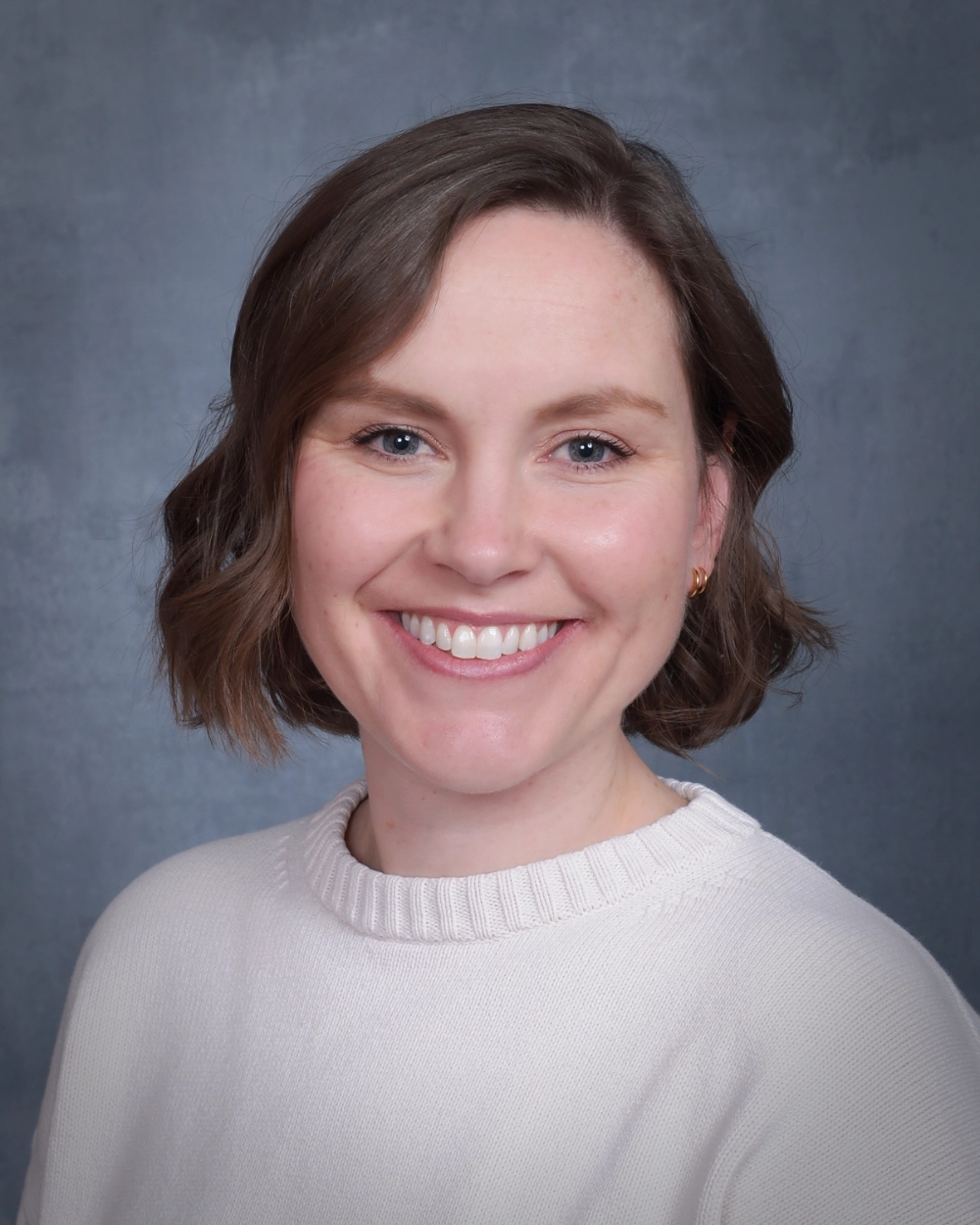
Kristina Farrell’s role is focused on driving embodied carbon reduction at the building level through rigorous research and industry collaboration. Kristina holds an M.S. in Structural Engineering and Mechanics from University of Colorado Boulder and a B.S. in Environmental Engineering from Cornell University.
By Kristina Farrell
Raised in rural Maine by a community that celebrated challenging the status quo and valued compassion, my career in sustainability has always felt like a welcome inevitability. My fondest memories from childhood involve being outdoors, working on our latest scheme, anything from zip-lining across the local pond to building the longest possible luge run in the backyard. My upbringing fostered a strong appreciation for the environment and a deep curiosity about how we choose to exist in the world. This interest inspired a high school science fair project measuring the effectiveness of different residential insulation types. Having helped with enough house projects involving itchy fiberglass batts and plastic-like boards, I wondered if there were products that were nicer to work with and offered similar performance. I found a company that sold insulation made from recycled denim and convinced my poor parents to drive me an hour (one-way!) so I could include it in my experiment. My recollection is that it performed pretty well and was an absolutely formative experience that helped set me on this path.
My early work was focused on operational energy and the corresponding impacts. My time right out of college was spent conducting energy audits, developing models, and helping to optimize building utility usage. I gained invaluable knowledge about mechanical, electrical, and plumbing (MEP) systems and became familiar with the operations and maintenance of buildings. I loved working in the industry, but found myself wanting something different for my career. Reflecting on what I valued most about my job, I realized it was working on buildings and supporting the interconnectedness of infrastructure, people, and the environment. I decided that I wanted to do more with the physical materials that offer tangible reminders of how structures can provide shelter, community, and safety.
After this realization, I went back to school to study structural engineering with a focus on materiality. It was here that I was introduced to the concept of embodied carbon and the knowledge that the production, use, and disposal of materials are responsible for significant emissions. I learned about life cycle assessment and how to leverage this methodology to quantify a material’s embodied impact. I felt that I had finally found a subject of work based around the physical building material, but fundamentally grounded in its unseen environmental implications. I was hooked.
While finishing up my degree, I got a job supporting the embodied carbon service area of a sustainable engineering consulting firm. I did numerous whole-building life cycle assessments, helped clients optimize designs to reduce embodied carbon, and worked on many incredible projects in the Denver metro area. This led to an opportunity to support the federal government in building out a framework to further construction decarbonization. I dove deeper into material-specific work and spent considerable time on the technical foundation of embodied carbon with background datasets, Product Category Rules, and Environmental Product Declarations. I had a chance to work with subject matter experts, practitioners implementing policies, and audiences of the work, which helped broaden and further my knowledge.
Throughout my embodied carbon journey, the Carbon Leadership Forum has been a guiding north star. From leveraging the organization’s comprehensive research in my own work to referring industry newcomers to the numerous accessible resources, CLF has played an integral role in my career. It is an honor to join this incredible team as a Low Carbon Buildings Lead. I am so excited to dive deeper into supporting embodied carbon reduction at the building scale and help develop the resources needed to grow knowledge and expertise in this area.
Looking back at everything this organization has accomplished so far, I am bolstered for the work ahead. My hope is that my contributions to CLF will further the elimination of carbon emissions in our built world to support a future where buildings and infrastructure are the foundation for a harmonious humanity.
Throughout my embodied carbon journey, the Carbon Leadership Forum has been a guiding north star. From leveraging the organization’s comprehensive research in my own work to referring industry newcomers to the numerous accessible resources, CLF has played an integral role in my career.