




Back to News and Features

May 8, 2026

2025 Annual Impact Report

This year, CLF provided guidance to policymakers who influence roughly $320 billion in construction spending. We’re now tracking 265 global policies that address embodied carbon. Key 2025 publications like our Material Baselines and Whole Building Benchmarks have been used by thousands of building industry practitioners to measure and reduce the climate impacts of our buildings.

A Message from our Executive Director 

Can you imagine a future where green construction is the status quo? In many ways, it won’t look much different than today. Low embodied carbon buildings will still have walls, windows, and roofs. Their structures will still withstand the elements. They’ll still be comfortable for us to occupy. And they’ll be resilient and durable enough to last for generations.

But they’ll be better. 

Industrial facilities that produce construction materials will run on renewable energy, creating cleaner air for their employees and neighbors. On job sites, zero-emissions construction equipment will operate quietly in our communities. And some sites will reuse disassembled materials from nearby buildings, reducing both new material production emissions and the tons of demolished materials that would otherwise be sent to our local landfills. 

New projects will be designed for flexible use, allowing structures to adapt to occupants’ changing needs over time. And when buildings eventually reach the end of their lives, they’ll be designed for a continued cycle of disassembly and reuse, rather than destruction. 

These buildings will be thoughtfully designed to meet our needs. Innovative ventilation systems, intentional building orientations, and smart placement of windows will reduce our energy demand while simultaneously reducing the need for large heating and cooling systems that slowly leak destructive pollutants throughout their lives. Efficient structural designs will allow us to build more schools, hospitals, and bridges with less material.   

And when we interact with these new structures, we might even feel new sensations. Imagine a new building smelling like a walk through a forest rather than volatile organic compounds. Or imagine the look and touch of walls that remind you of natural materials found where you live.

As we work to realize that future, reducing embodied carbon creates opportunities for creativity and innovation. Every new construction project is a chance to reimagine existing structures and build imaginative new ones that are affordable and joyful to occupy. This intentional process of planning, design, and construction can help us redefine what is “normal” and make increasingly lower-carbon buildings the status quo. 

For those outside the building industry, the Carbon Leadership Forum’s impact might feel invisible. The wonky world of standards development, data analysis, building design, and policy implementation may feel far removed from your daily life. But next time you walk past a construction site or step into a building, there’s a chance, whether or not you can see it, that building is part of the solution we’re helping create.

This year, CLF provided guidance to policymakers who influence roughly $320 billion in construction spending. We’re now tracking 265 global policies that address embodied carbon. Key 2025 publications like our Material Baselines and Whole Building Benchmarks have been used by thousands of building industry practitioners to measure and reduce the climate impacts of our buildings. Beyond the resources and direct support provided by CLF staff, volunteers across dozens of CLF Hubs are scaling regional action from the ground up. 

Across the world, a growing community of innovators and leaders is working to reduce embodied carbon and achieve the many benefits of cleaner construction. This annual impact report offers a glimpse into how CLF and our partners are making that future a reality. It’s a celebration of what we’ve accomplished together, and I hope it’ll serve as an invitation to help us continue building toward a just and thriving future.

anthony hickling signature

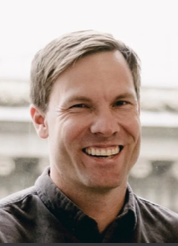
Anthony Hickling, Executive Director

Community Testimonials

CLF has been an excellent partner and resource for NRDC in our work on embodied carbon. CLF staff expertise on WBLCAs, regional baselines, and EPDs has been a tremendous help in communications with policy makers who have detailed questions about scope and limits of existing methods. CLF has also been a great thought partner in the development.

 — Mikhail Haramati, State Industrial Decarbonization Lead, Climate & Clean Energy Program, NRDC

Everyone is wondering what “good” looks like when it comes to embodied carbon; CLF’s data gives them certainty they are moving the right direction. The Carbon Leadership Forum’s v2 Benchmark study and its accompanying dataset allowed us to embed comparative metrics directly into our workflow tool, helping practitioners get real-time insights on how their building stacks up against others. It’s our goal to get a whole life carbon assessment done on every project by every firm everywhere; the work of the CLF accelerates our progress toward this goal.

 — Jack Rusk, CEO and Cofounder of C.Scale

CLF’s insights directly supported the City of Vancouver’s development of low‑carbon neighbourhood strategies and informed the reporting framework for our Zero Emissions Buildings Incentive Program. Their benchmarking study—along with CLF’s work with leading state‑level governments—strengthened our understanding of design drivers in reducing embodied carbon and helped shape our policy. With their unique ability to convene experts across the world, CLF consistently sets the benchmark for best‑practice embodied carbon policy.

 — Forest Borch, Planner, Embodied Carbon, City of Vancouver

No single firm can take on the challenge of reducing embodied carbon alone; it will take a movement across the entire design and construction value chain. Through CLF’s knowledge sharing, education, and networking opportunities, our key design and supply chain partners are better equipped to help us deliver on our embodied carbon reduction goals. The CLF has also been my go-to resource for understanding the ever-changing embodied carbon policy landscape across the US.

 — Mark Chen, National Carbon Manager with Skanska USA Buildings

Reducing embodied carbon in construction materials is a critical step toward building more sustainable infrastructure. Progress depends on collaboration among researchers, policymakers, and practitioners nationwide. Organizations like the Carbon Leadership Forum help bring this community together and are a valuable resource as New York State continues developing guidance on embodied carbon in construction materials.

 — Mariane Jang, Senior Policy Advisor, Division of Resiliency & Sustainability, New York State Office of General Services

CLF’s NGO/Government Roundtable on Embodied Carbon provides an opportunity for us to learn from and connect with international partners. For example, a presentation on mass timber assessments and biodiversity conservation from the Materials and Embodied Carbon Alliance (MECLA) in Australia lent us insights on how to champion wildlife habitats in the urban built environment. As a result, we became inspired to focus on urban small lot forests, indigenous tree nurseries, and sustainable forest practices for mass timber. This can attract industrial project managers to work with standards developed by ecologists and add much needed revenue models for sustainable forest management.

 — Dr. Cecilia Wandinga, Executive Director of the Centre for Science and Technology Innovations in Nairobi, Kenya

Our collaboration with the Carbon Leadership Forum has enabled Autodesk to connect CLF’s industry expertise, depth of research, and public data to the millions of customers who use Autodesk technology to design and make a more sustainable built environment. We have connected CLF’s baselines of embodied carbon data to the Autodesk platform through APIs. This closes the gap between CLF’s carbon intelligence and the design and construction data in Autodesk products. This empowers architects, engineers, and contractors to establish a starting point for carbon assessments in their digital workflows to ultimately reduce embodied carbon.

 — Sheena Zhang, Senior Manager, AECO Sustainability Strategy, Autodesk

The Carbon Leadership Forum plays an important role in helping Owens Corning better understand and address embodied carbon across the built environment. CLF’s work on material baselines and data transparency provides valuable reference points that support more informed decision making and enable meaningful comparisons across materials and systems. This clarity helps us identify opportunities to reduce embodied carbon while maintaining performance and durability in pursuit of our sustainability goals.

 — Cheryl Smith Product Sustainability Strategy Leader, Owens Corning

Latest News Stories

2026 – 2029 Strategic Plan

How we're evolving by Anthony Hickling, Executive Director Embodied carbon emissions from buildings and infrastructure...