






By Thomas Stanchak – Managing Director of Sustainability, Stoneweg US
I think my honest impression is fair: many real estate investors view embodied carbon as a geeky academic exercise that’s complex and impractical, a big time-wasting distraction, and a completely sunk cost with no tangible value. My personal experience has led me to a completely different conclusion.
My employer, Stoneweg US, tasked me with evaluating the embodied carbon of two institutional-scale ground-up multifamily development projects we have on deck. The goal was to understand the embodied carbon and see if there were financial incentives to make a lower-emissions project feasible.
I assumed this would be an expensive box-checking exercise meant to appeal to mission-driven investors rather than genuinely improve returns. What I found instead changed how I think about development economics.
Embodied carbon is currently an invisible line item in real estate underwriting. It’s there, but nobody sees it, and no one is leveraging it to make a profit. The best developers seem to focus solely on optimizing operational efficiency because it lowers utility costs, but few even bother to consider carbon emissions from materials or recyclability because there’s no obvious corresponding line item in their underwriting. The assumption is that any effort here is a reputation and marketing play that will just increase costs.
My first experience with embodied carbon and the LCA process was complicated. I often felt lost and frustrated. We waited too long to get started. The LCA got on the agenda after the projects were already largely designed. As a result, material take-offs weren’t readily available, making accurate analysis difficult. After considering our options and the costs, we found a third party to extract the material take-off data from plans at a reasonable price. When I received the first draft of the LCA, it contained errors, and as a non-expert, I had to dig into the assumptions myself to challenge the conclusions and ensure the results were both reasonable and actionable.
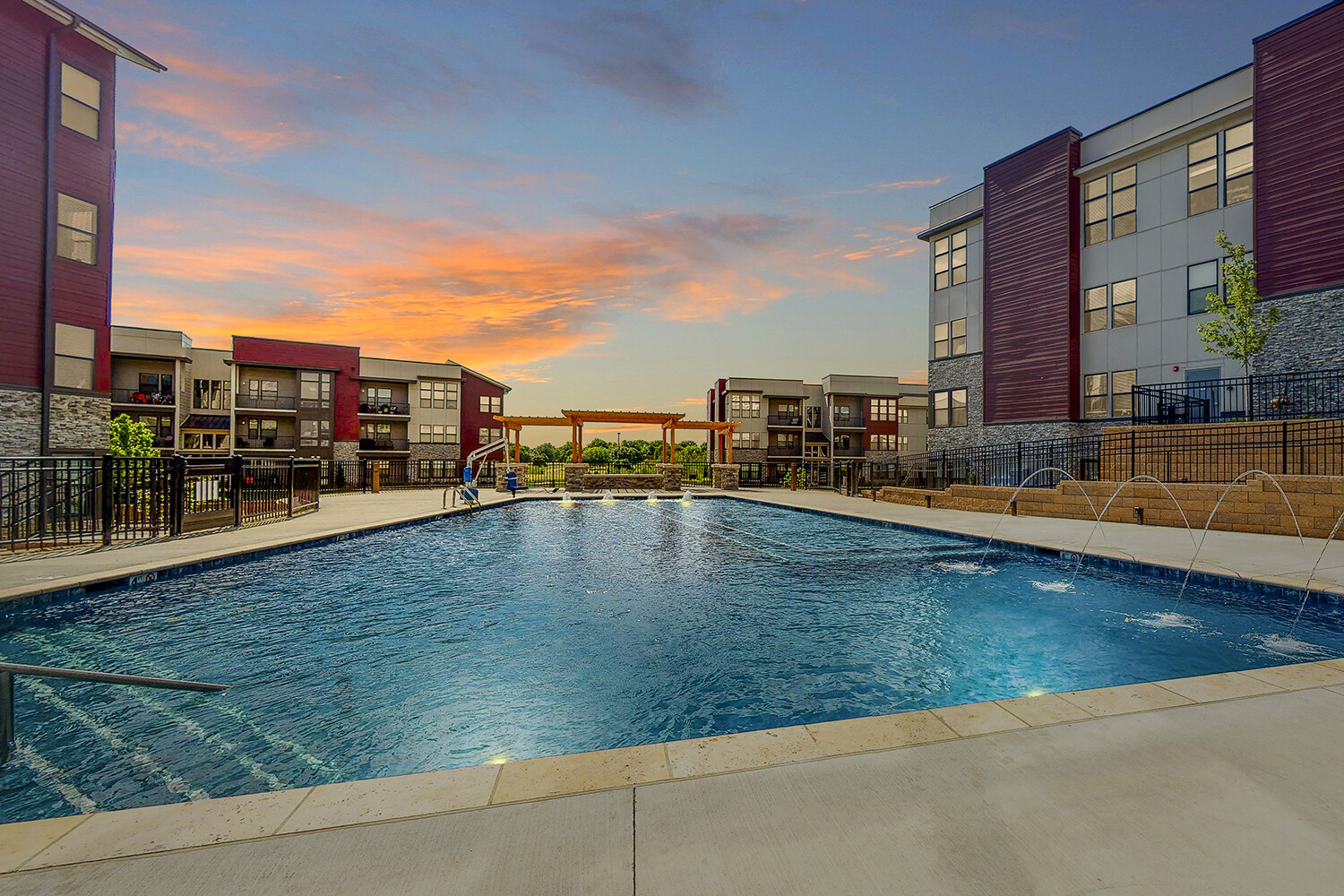
Multi-family development project by Stoneweg
Despite these hurdles, the effort was worth it. We discovered that our designs, while already fairly carbon efficient, could be improved by almost one-third through relatively nominal investments in practical alternative materials. My cost/benefit estimation of these improvements amounted to less than a 1% percent increase in overall construction costs to achieve the 1/3 reduction. The underwriting implications of the incentives were significant. Our conservative estimates showed that these optimizations would likely increase the final completion valuation by 3.3 percent. Additionally, the improved design would reduce debt service over the first permanent loan period, resulting in projected savings of approximately $2 million dollars.
This experience has fundamentally shifted my perspective. Moving forward, we will integrate LCA earlier in the design process to ensure that embodied carbon considerations are factored into material selection from the start. We will also require BIM software for accurate and efficient material data collection and evaluation, which will streamline the process and reduce the need for third-party estimations. Furthermore, real estate teams need to understand the basics of LCA benchmarks. They don’t need to become experts, but they do need to know what is normal for multifamily developments, communicate the benefits effectively, and, most importantly, understand the incentives that make it more profitable than the base case.
The narrative around embodied carbon in the real estate investment world needs to change. Old assumptions that are no longer true are cutting off the market from valuable incentives. Building more sustainably is a financial lever that generates improved returns and a better product. The question in my mind now isn’t whether underwriting embodied carbon will become an industry standard—it’s how soon. Early adopters will benefit the most and shape the future market. Those who wait will have to adapt and follow the path laid by the leaders.


Thomas Stanchak is a Commercial Real Estate professional with >20 yrs of diverse experience. He is currently the Managing Director of Sustainability for Stoneweg US, LLC, a leading real estate investment firm founded in 2016 with a focus on sustainable multifamily assets.