





I will guess that anyone reading the Carbon Leadership Forum newsletter this December is feeling a fair amount of newly charged climate anxiety. As we look to 2025, there are countless “what will happen now?” scenarios swirling around the minds of those who care deeply about the work of mitigating climate change and building resilient communities.
Il Climate Emotions Wheel developed by the Climate Mental Health Network acknowledges and names these feelings, validates them, and helps to create a sense of shared experience. The wheel displays a wide range of emotions that we experience in this work regularly; some days it’s hope or inspiration, and other days it’s frustration, worry, or despair. These varied emotions inform and impact our work and also our well-being.

As I’m sure many of us feel, working in the field of climate change mitigation and solutions also comes with a constant sense of urgency. A pervasive feeling that maybe our work is more important than anything else we could be spending our time and energy on. For me, it’s very easy to get lost in my to-do list and my constant reprioritization of the work tasks that could have the most impact, reach the most people and potentially catalyze the most change. It feels important and urgent to get as much accomplished in a day as possible, and it’s easy for me to lose track of taking the time to take a walk, get outdoors, make some tea, read something inspiring, or do something that brings me joy.
I recently bought myself this mug that knowingly reminds me that, “You can’t pour from an empty cup.”
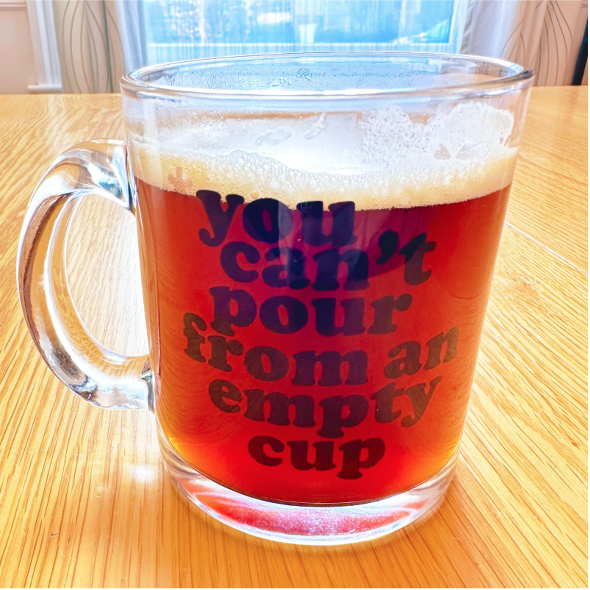
It’s a helpful reminder for me that we must respect and care for ourselves in order to be fully present in our work. Why is this important? Apart from being a clever meme, why does filling your own cup matter for doing this work? Because we are stronger together if our cups are full. Climate anxiety and urgency leading to work intensity easily result in burnout and being depleted, which doesn’t allow us to bring our whole selves and passion – and our best work – to this work.
In the upcoming four years, and with the underlying sense of escalating climate anxiety, I have a feeling this will be even more challenging, but this work needs our long-term commitment and our ability to innovate, collaborate, and model resilience, which can only result from caring for ourselves first.
And if you’re looking for some uplifting climate stories and hopeful scenarios for the future, I highly recommend Ayana Elizabeth Johnson‘s new book, What If We Get It Right? It is filled with conversations with experts, advocates, and doers working on solutions from farming, agriculture, and soils to finance and climate tech investments to building materials to the importance of art and culture and feeling joy in this work.
As the holidays and end of the year approaches, allow yourself to fill your cup however it gets filled for you. We will all be better off for it.

Climate anxiety and urgency leading to work intensity easily result in burnout and being depleted, which doesn’t allow us to bring our whole selves and passion – and our best work – to this work. It feels important and urgent to get as much accomplished in a day as possible, and it’s easy for me to lose track of taking the time to take a walk, get outdoors, make some tea, read something inspiring, or do something that brings me joy.