







Back to all resources

Stratégie de mise en œuvre concrète et consciente

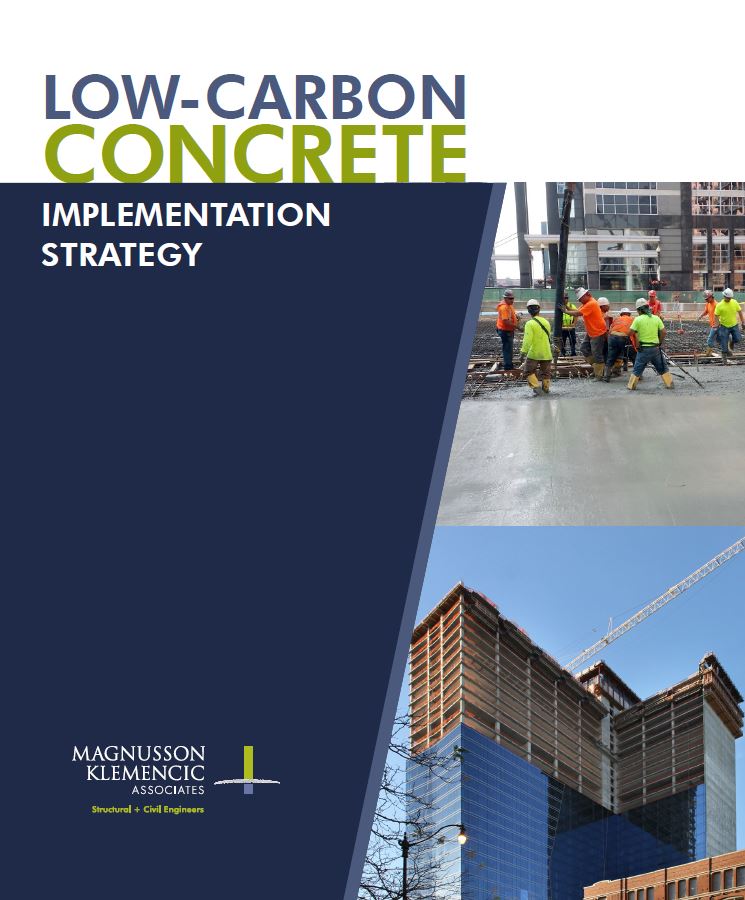
To meet global emissions targets and curb the negative effects of climate change, ambitious sustainability goals must be set and exceeded in the design of the buildings we create. Given the large carbon footprint of the built environment, a unified approach to the environmental performance of structural materials can produce a substantial positive impact.

Chaque projet individuel présente une opportunité d'optimiser la performance environnementale des matériaux de structure et, ce faisant, produira des résultats de durabilité positifs pour le projet et l'industrie dans son ensemble.

Ce guide vise à illustrer que grâce à une communication et une planification appropriées, des résultats environnementaux ambitieux peuvent être atteints. Ces résultats environnementaux positifs peuvent souvent s'accompagner d'avantages en termes de coûts pour le projet.

This guide is not attempting to address all parts of a project’s low-carbon potential. It is also not attempting to answer the early project decisions of what structural system or materials to consider, or if the building should be an adaptive re-use or new construction project. Those decisions should happen before this guide comes into use.

Bien que les idées de spécifications et d'approvisionnement derrière ce guide puissent être adoptées pour d'autres matériaux et systèmes, ce guide se concentre étroitement sur deux des plus grandes sources ponctuelles de carbone incorporé dans un projet de construction non combustible typique de type 1 : le béton et la structure en acier. Cadre.

Objectifs du Guide

  • Illustrer l'impact environnemental des matériaux de structure.
  • Fournir un exemple de langage pour les documents de contrat et d'appel d'offres.
  • Encourager l'adoption de cette approche pour spécifier et proposer des matériaux de structure durables.
  • Unifier la nature des demandes aux fournisseurs de matériaux de structure.

Contenu du guide

  • Prise de décision sur le cycle de vie – Carbone incorporé
  • Chronologie
  • Implémentation & Réalisation de Structure Bas Carbone
  • Considération matérielle supplémentaire
Reclaimed and Reused: Recommended LCA Modeling Guidance to Support EPDs for Reused Construction Materials

Material reuse is one strategy for reducing the embodied carbon of construction. While the preparation of previously used materials for reuse has an environmental impact, it avoids many of the resource extraction and manufacturing impacts of building with newly manufactured products. Given the amount of demolition and deconstruction across North America (and beyond), there is a vast potential for material reuse to expand in scale. However, barriers to material reuse scaling exist.

DEQ Low Embodied Carbon Housing Program: Roadmap to Success

Embodied Carbon Pathways to 2050 for the United States, a collaboration between the Carbon Leadership Forum (CLF), RMI, and the University of Washington (UW) Life Cycle Lab, provides an assessment of embodied carbon from US construction materials and explores pathways to align with a 1.5°C global warming limit.

International Embodied Carbon Data Availability: A Review of Environmental Product Declaration (EPD) Availability in Europe, China, and Australia

CLF completed a landscape analysis of product-level embodied carbon data availability in regions outside North America with the goals of: (i) understanding how LCA/EPD data availability varies globally; (ii) informing where targeted initiatives are needed to increase the availability of data; and (iii) determining whether adequate EPD data exists to develop CLF Material Baselines outside North America. This report summarizes our findings and provides initial insights into what data is available to inform low-carbon procurement efforts in Australia, China, and Europe.

The CLF Benchmark Explorer

Emissions from the operations of buildings and infrastructure are significant, well-understood contributors to national and global greenhouse gas emissions. However, the contribution of embodied carbon—emissions associated with the manufacturing, transportation, installation, maintenance, and disposal of construction materials across the life cycle of a building or asset—is neglected by comparison. Even at the global level, embodied carbon estimates are typically based on manufacturing emissions from the production of a handful of the highest-impact materials (e.g. concrete, steel, aluminum, and wood).

Embodied Carbon Pathways to 2050 for the United States

Embodied Carbon Pathways to 2050 for the United States, a collaboration between the Carbon Leadership Forum (CLF), RMI, and the University of Washington (UW) Life Cycle Lab, provides an assessment of embodied carbon from US construction materials and explores pathways to align with a 1.5°C global warming limit.

Washington State Carbon Emissions Estimation: 2025 – 2050

Emissions from the operations of buildings and infrastructure are significant, well-understood contributors to national and global greenhouse gas emissions. However, the contribution of embodied carbon—emissions associated with the manufacturing, transportation, installation, maintenance, and disposal of construction materials across the life cycle of a building or asset—is neglected by comparison. Even at the global level, embodied carbon estimates are typically based on manufacturing emissions from the production of a handful of the highest-impact materials (e.g. concrete, steel, aluminum, and wood).

View all policy resources in our resource library