




The Carbon Leadership Forum is currently conducting a multi-year project to develop a robust and harmonized database of WBLCA benchmarks.

Embodied Carbon Benchmarks Report
Embodied Carbon Budgets and Analysis of 292 Buildings in the US and Canada

The CLF Benchmark Explorer
A tool to better visualize data created by the WBLCA Benchmark Study V2, consisting of a set of customizable box and whisker plots for use in design, research, and education.

WBLCA Benchmarking Dataset
An open-access dataset of WBLCA results for 292 building projects

The California Carbon Report
An Analysis of the Embodied and Operational Carbon Impacts of 30 Buildings
Sobre
In 2017, the CLF published the Estudio de referencia de carbono incorporado for North American buildings. Since then, the practice of whole-building life cycle assessment (WBLCA) has grown rapidly in the AEC industry, and it has become clear that more robust and reliable benchmarks are critical for advancing work in this field. The new CLF WBLCA Benchmark Study (Version 2) is built upon research and insights from the 2017 study. The project expanded our research methodology, included more comprehensive data collection, and resulted in a high-resolution dataset of harmonized WBLCA model results and project design characteristics for nearly 300 buildings across the United States and Canada. With this data, the team analyzed the impacts of buildings, identified drivers of high and low-carbon projects, and published benchmarks for multiple applications. Outcomes from this project enable designers and decision-makers to set reliable embodied carbon targets and understand the potential for reduction throughout the design and construction processes.
This project fills a critical gap in the AEC industry and helps to enable architects, engineers, policymakers, and the entire design community to work towards realistic and measurable embodied carbon reductions at the building scale.
Project Components
There are 3 components to this project that build on each other to ultimately deliver a more robust dataset, analysis framework, and set of benchmarks:
- Pilot Phase (2022 – 2023): The pilot phase set forth the development and testing of data collection processes and data analysis methods to support future work throughout the study. This phase involved conducting background research, hosting industry workshops, establishing pilot partners, and collecting pilot dataset of projects to inform the feasibility and infrastructure for future work.
- California Carbon Report (2023 – 2024): This project component focused on the whole-life carbon impacts of a discrete set of buildings in California and examined the relationship between embodied and operational carbon impacts over time when considering future grid decarbonization projections. It culminated in the California Carbon Report: An Analysis of the Embodied and Operational Carbon Impacts of 30 Buildings, which can be downloaded on the California Carbon Report webpage.
- North American Benchmarks and Database (2024-2025): Throughout 2024, the CLF collected a dataset of 200+ high-quality WBLCA models of real-world building projects with the help of over 30 firms located in North America. In the spring of 2025, the dataset was published open-access for all to use. The research team used the dataset to conduct statistical analysis on the embodied carbon impacts of buildings and provide estimates of typical, low, and high values for buildings in North America. A full list of publications from this phase, including reports, dashboards, and journal papers, can be found below.
Project Outcomes
A full list of outputs from this study include:
Reports and research papers:
- The Embodied Carbon Benchmark Report: Embodied Carbon Budgets and Analysis of 292 Buildings in the US and Canada.
- Dataset Methodology: A Harmonized Dataset of High-resolution Whole Building Life Cycle Assessment Results in North America.
- Open-access Dataset: A Harmonized Dataset of High-resolution Whole Building Life Cycle Assessment Results in North America: Data only – First Public Release.
- Exploratory Data Analysis of a North American WBLCA Dataset.
- Embodied Carbon and Material Use Intensity Analysis of New Construction Buildings in North America.
- The California Carbon Report: An Analysis of the Embodied and Operational Carbon Impacts of 30 Buildings
- The California Carbon Report Summary: Six Key Takeaways for Policymakers
- A Whole-Life Carbon Assessment of 30 Buildings in California, USA.
Visualization dashboards:
Other project documents:
- CLF WBLCA Benchmark Study (v2) Data Collection User Guide v1.0
- CLF WBLCA Benchmark Study (v2) Data Entry Template v1.0
Data Collection Status
CLF is currently planning the next iteration (v3) of our benchmarking project. If you would like to support, contribute to, or stay informed about the next version of this study, please fill out this expression of interest form.
Project Updates
Public Dataset Now Available! - March 2025
We are thrilled to announce the release of an open-access dataset of WLBCA results from the project. The dataset encompasses highly detailed and harmonized building design characteristics, material quantities, and environmental impacts for 292 building projects across the United States and Canada. In total, the dataset represents nearly 5 million square meters of newly constructed floor area.
The dataset aims to enable designers, owners, researchers, and policymakers to analyze and compare the impacts of buildings, set performance targets, and motivate impact reductions. We hope this catalyzes future initiatives within the field to expand the scope and scale of LCA data collection and achieve higher levels of detail and methodological harmonization to support research on sustainable design and construction practices.
You can access the dataset aquí and read about how it was created and how to use it aquí. Enjoy!
Curious about what’s in the dataset and how to get started? Download the Resource Spotlight to dive in!
The California Carbon Report Webinar – July 1st, 2024
The research team for the California Carbon Report recently gave a webinar about the study to share details about the methodology used, additional findings, and how this research can support the design and policy communities towards decarbonizing real-world buildings. You can view the recording below, or by following this Youtube link. For more information about this report, please visit the California Carbon Report webpage.
Publication of The California Carbon Report – May 13, 2024
The first report from the CLF WBLCA Benchmark Study (v2) is now available! In this study, we investigated the use of whole life carbon assessment (WLCA) through a sample of 30 new construction building projects located in the State of California that were sourced from design practitioners as part of the CLF WBLCA Benchmark Study (v2). Please visit the California Carbon Report webpage to download the full report.
Greenbuild 2023 Update – September 28th, 2023
We recently had the pleasure of presenting a project update alongside Lindsey Kahler of SERA Architects and Brie McCarthy of Miller Hull at this year’s Greenbuild 2023. Our session was titled Embodied Carbon Benchmarking: the prerequisite to making meaningful impact reductions within the AEC industry, and we explored the importance of embodied carbon benchmarking and the ways in which design practitioners are engaging in similar efforts at the firm-scale. As promised to our Greenbuild audience, our slides can be downloaded here.
Open Call for Data Contributors—May 22nd, 2023
Data Collection Introduction call—May 3rd, 2023
We are gearing up to officially launch our call for data soon. Please stay tuned for more updates!
Official Launch of Phases 2-3 – March 27th, 2023
We’ve recorded a full project overview that describes the entire project and each individual effort in more detail. This 15-minute recording also outlines the ways we will be conducting stakeholder engagement in the coming weeks and future project efforts to be aware of.
Pilot Phase Completion – October 2022
The project team has recently wrapped up our initial pilot phase of the WBLCA Benchmark Study which focused on reviewing existing literature and building internal data infrastructure. During the pilot phase, we:
- Developed a process for architecture or engineering firms to easily submit detailed Tally models, Bill of Materials, and other project information.
- Developed infrastructure to enable robust data analysis at a building, assembly, and material scale.
- Conducted extensive background research on WBLCA benchmarking and benchmark development in the US and Europe.
- Tested data collection templates and reporting processes.
- Identified stakeholders and interested parties for future participation.
In the next phases of the project we will expand the project to:
- Include a larger sample set of firms, projects, and WBLCA tools.
- Build upon the work completed in the Pilot Phase.
- Establish stakeholder working groups for technical advisory, communications, harmonization, and more.
Agradecimientos
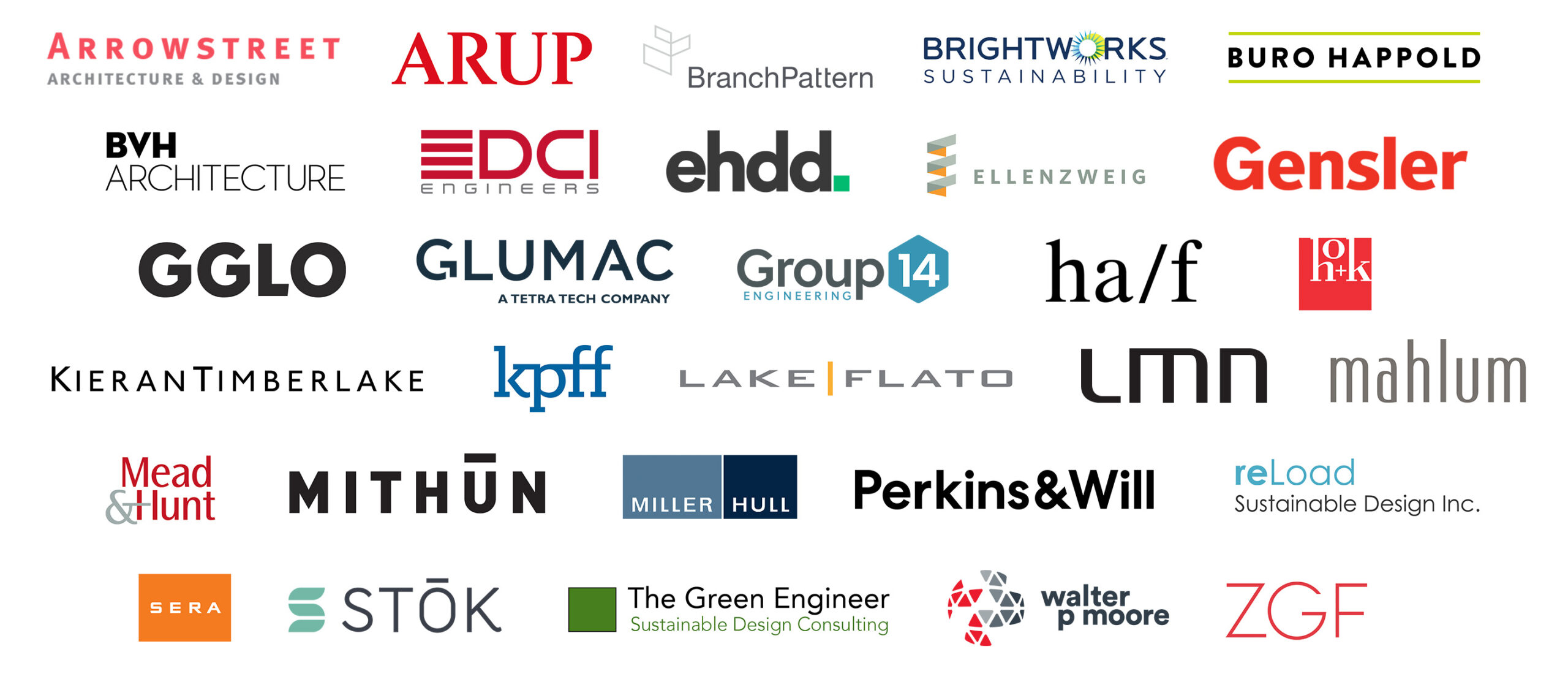
Additionally, we thank this study’s participating design practitioners (data contributors) who provided substantial time and effort in recording and submitting building project data and sharing feedback with the research team. These companies included:
Embodied Carbon Benchmarks Report
Embodied Carbon Budgets and Analysis of 292 Buildings in the US and Canada
The CLF Benchmark Explorer
A tool to better visualize data created by the WBLCA Benchmark Study V2, consisting of a set of customizable box and whisker plots for use in design, research, and education.
WBLCA Benchmarking Dataset
An open-access dataset of WBLCA results for 292 building projects
The California Carbon Report
An Analysis of the Embodied and Operational Carbon Impacts of 30 Buildings