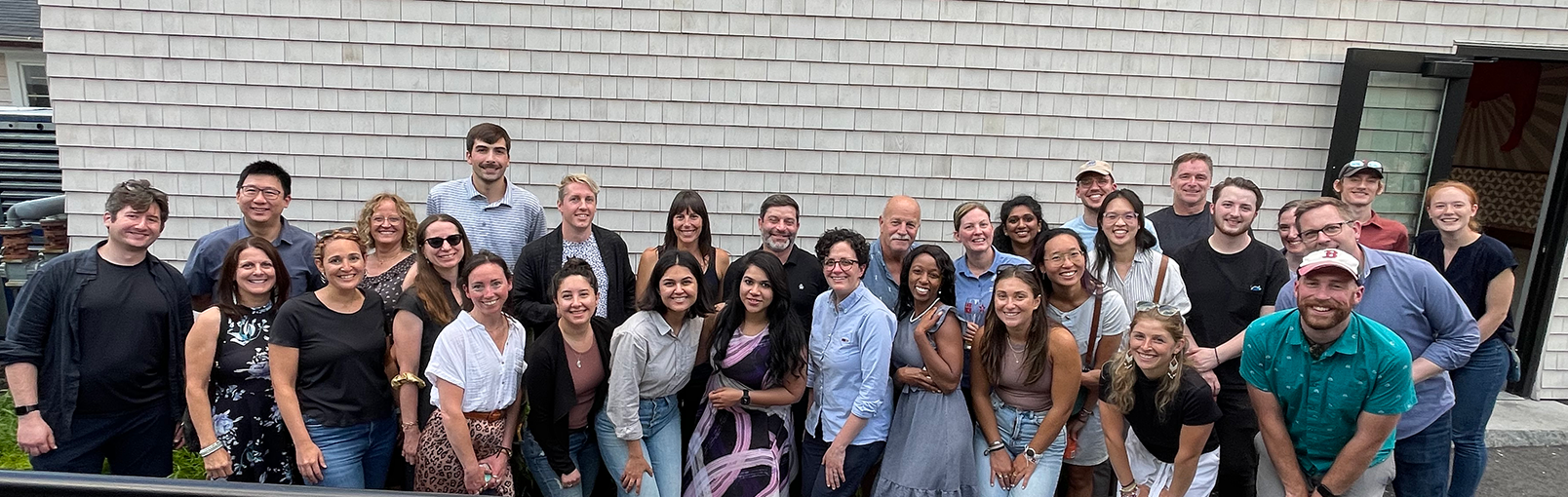
By the CLF Boston|NE Hub Leadership Team
In 2019 the Boston Society of Architects organized a summit, called “Embodied Carbon in Buildings,” which sparked interest in forming a place to share information about reducing embodied carbon emissions – and from that summit, the CLF Boston | NE Hub was born. From the beginning, the Hub has been about strengthening relationships and working in concert across disciplines for the greatest impact and the furthest reach. As the hub has grown, the focus has shifted to fill gaps in education and providing support for best practices in research and implementation.
The Hub’s earliest efforts were about advancing education around measuring and tracking embodied carbon. In 2020, this led to the creation of the Embodied Carbon 101 series, which was also hosted through the BSA. Because this series rolled out early in the pandemic, it became a series of webinars that included experts from across the region and was able to reach a wide geographic audience. An added benefit was the ability to record the sessions, which became a robust, foundational library that is now part of the AIA University’s educational offerings. Following up on the success of the first two events, the Hub was inspired to dig deeper. The next year’s series was developed around Implementation, focusing on embodied carbon analysis and reductions.
Throughout this time, the Hub established itself as a vital platform for members to share observations, challenges, and successes. Several subgroups sprouted to focus on collaboration: Education, Policy, Reuse/Circularity, and Concrete.
Policymakers, architects, engineers, and contractors have been adjusting design processes and challenging norms. Regional regulation is coming into play, and our advocacy efforts are moving the needle. Our subgroups have been advancing research and knowledge on adaptive reuse, material reuse and salvage, concrete, insulation, and biogenic materials. Designers are increasingly using Tally in their workflow and starting to put together LCAs.
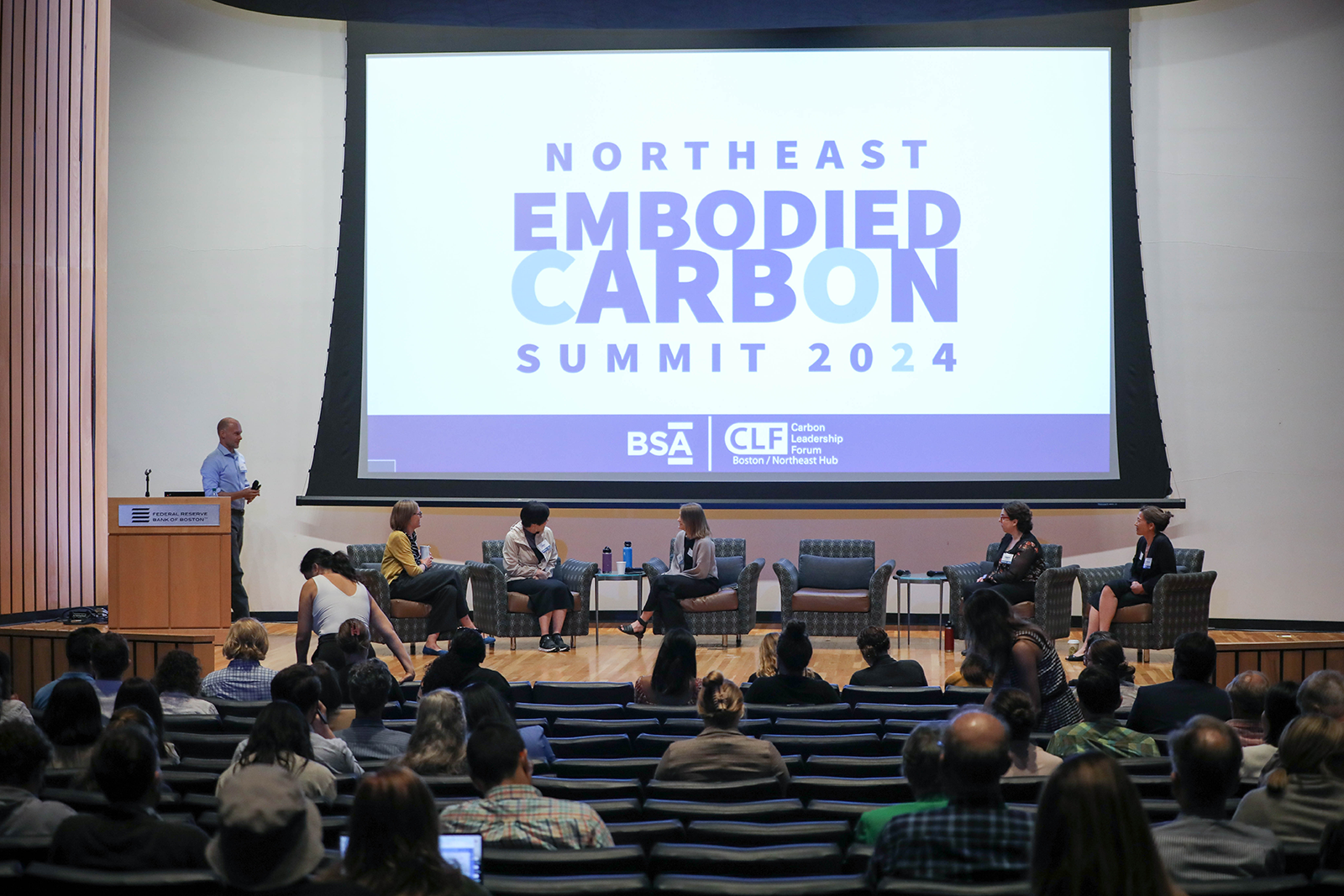
Acknowledging the work of the subgroups and where we’ve seen the most progress in the industry regionally, the Summit was organized around three themes: Policy & Advocacy, Practice, and Pushing Forward. A panel was organized across each of these themes, focusing on synergies across the region and industries. This cross-disciplinary approach meant that the group was able to holistically understand the full ecosystem of stakeholders working in this space and identify how to continue to push the boundaries of our practice. After the first day of panel discussions, the second day’s workshops delved deeper into focused sessions inspired by each subgroup’s current initiatives.
We are thrilled to report that the Summit has galvanized energy around ongoing initiatives, and even sparked the launch of an infrastructure working group. This group plans to focus their collective efforts on how best to engage State DOTs and municipalities with embodied carbon awareness, how to leverage federal funding opportunities, and to develop guidance for all stakeholders in the supply chain to understand the responsibilities and opportunities for each. Each subgroup is now better positioned to expand its impact and collaborators. The Reuse group has inspired MassDEP to start its own deconstruction working group and reuse grant program; meanwhile, the City of Boston started its own zero-waste deconstruction pilots.
Throughout all of last year, the Concrete group steered a grant-funded effort to engage stakeholders and understand how to lower the embodied carbon emission of concrete. They identified obstacles and opportunities in a gamified report that provides replicable, immediate solutions.
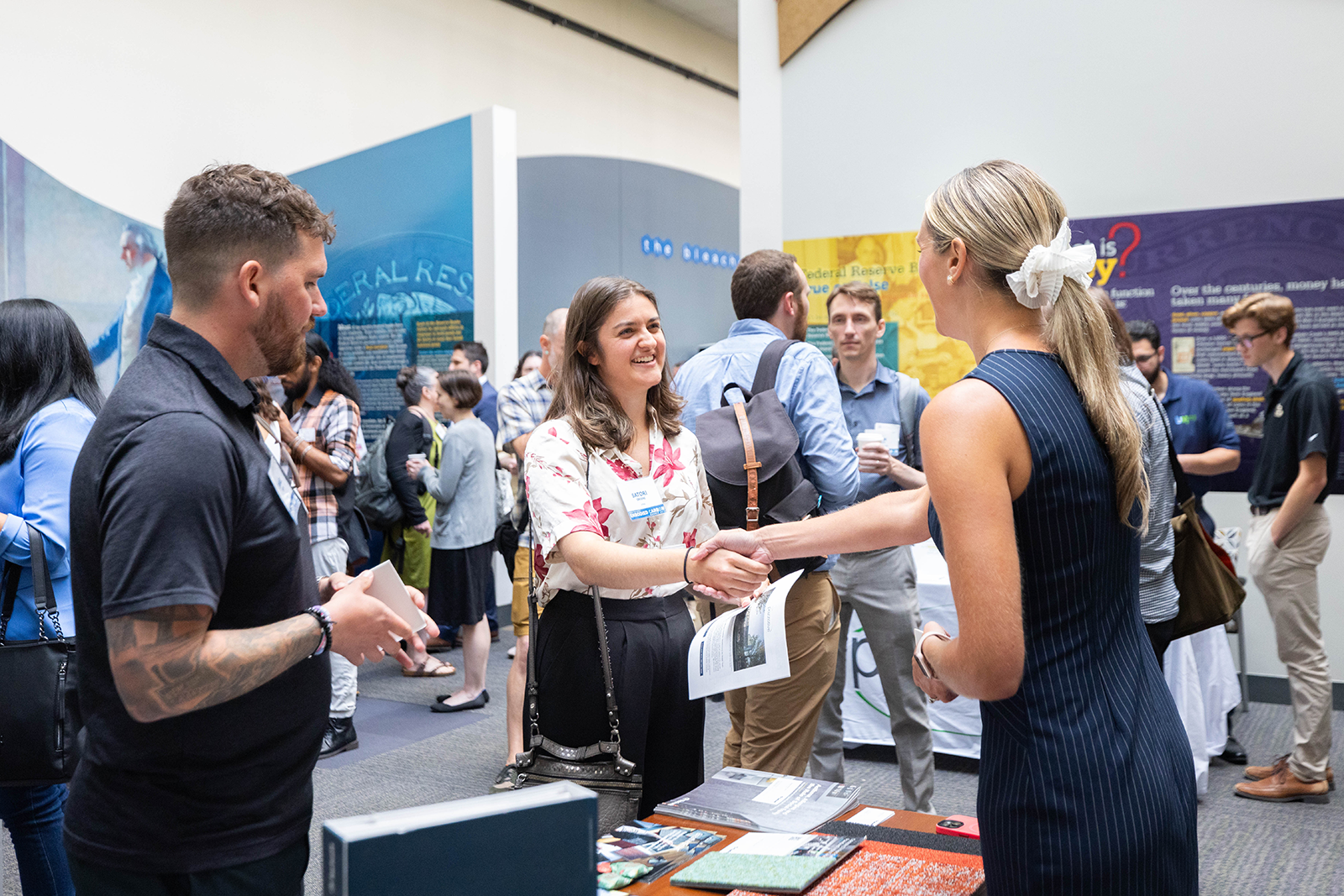
The reach we have as a Hub is driven by energy and collaboration between diverse stakeholders, and we’re joined in the intent to make the Boston | NE Hub a place for community and connection, where passionate and knowledgeable people can come together to push the industry forward. Over the life of the group, the largest forward steps have occurred when we unite to learn from one another and strive collectively to decarbonize the built environment.
CLF wants to thank the CLF Boston | NE Hub for their continued efforts and embodied carbon leadership in pursuing the mission of the CLF to reduce embodied carbon in the built environment.
Boston | NE Hub leadership team
- Andrea Love – Principal / Director of Building Science, Payette
- julie janiski – Partner, Buro Happold
- Michelle Lambert – Embodied Carbon Policy and Engagement Manager, Carbon Leadership Forum
- Rachelle Ain – Senior Associate, Utile
- Suni Dillard – Senior Associate, Sustainability Leader, HMFH Architects, Inc.
- Nicole Voss – Director of Sustainability & Associate Principal, isgenuity LLC
To connect with the hub, please email Suni Dillard y Nicole Voss, and check out the website

This past June, Boston Hub leaders organized a follow-up summit to the first Embodied Carbon in Buildings event. The five-year anniversary allowed us to celebrate the significant advancements we’ve made as a region and industry while reinforcing our commitment to the work ahead. It served both as a celebration and a reminder that there is still more to accomplish.