Transition Announced: CLF Launches as Independent Nonprofit Organization

por Kate Simonen
Founder and Board Chair of the Carbon Leadership Forum and Professor of Architecture, University of Washington

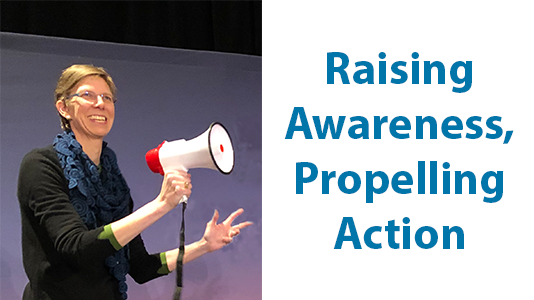
Over the last 14 years, the Carbon Leadership Forum has been raising awareness and propelling action to ensure that embodied carbon is dramatically reduced to create a just and thriving future. Thanks to the collective leadership of CLF, industry practitioners, policymakers and others, we are beginning to witness significant progress.

In recognition of unprecedented recent momentum, I’m very happy to share that CLF is making changes to our organizational structure and leadership that will enable us to expand our influence and impact.

Some of you may not know that CLF has historically operated under the umbrella of the University of Washington’s College of Built Environments. Beginning in April 2024, we are spinning off the Carbon Leadership Forum as an independent nonprofit organization. While I will continue to oversee CLF as board chair, I am excited to share that organizational management will now be led by Anthony Hickling as CLF’s new executive director and Meghan Lewis as CLF’s new program director.

At the same time, I will continue to lead the development of academic research out of the UW College of Built Environments’ newly named Life Cycle Lab supporting the next generation of researchers and pursuing critical embodied carbon research with an increased focus on academic publications. Both CLF and the Life Cycle Lab will continue to work collaboratively and we are looking forward to new opportunities to collectively reduce embodied carbon in buildings and infrastructure.

For more information, I encourage you to take a look at our full press release y FAQ here. We appreciate your support and patience while we embark on this transition over the next year and beyond.

I am excited and optimistic about this strategic change. For all of you who have helped us make it this far, I thank you.

Read the Complete Story
CLF Releases the Embodied Carbon Toolkit for Roadway Infrastructure

by Milad Ashtiani
CLF Researcher

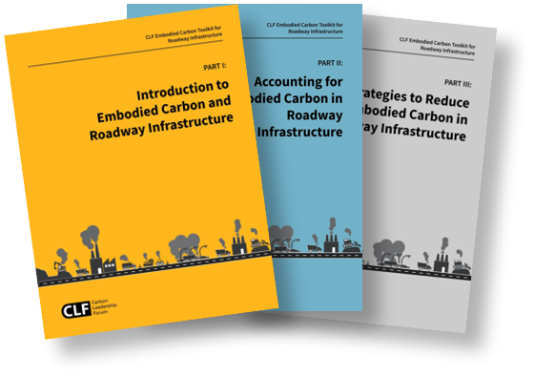
Building and operating the extensive network of our roadway infrastructure requires significant flows of energy and material resources. CLF’s recently published toolkit dives deep into the sources of greenhouse gas emissions from roadway construction, offers insights into accounting methodologies, and outlines key strategies to reduce these emissions.

CLF Embodied Carbon Toolkit for Roadway Infrastructure is part of a series designed to serve as a reference for transportation agencies, policymakers, designers, builders, and researchers involved with the construction, maintenance, and management of our roadways. Building on our previously published AIA-CLF Embodied Carbon Toolkit for Architects, this toolkit is a continuation of CLF’s expanded involvement within the horizontal structure arena (aka, infrastructure).

Explore the Infrastructure Toolkit
CLF Publishes Report on End-of-Life Modeling and Data in North American Whole Building Life Cycle Assessment Tools

The Carbon Leadership Forum (CLF) has published a pivotal research document titled "End of Life Modeling and Data in North American Whole Building Life Cycle Assessment Tools." This publication is a result of a collaborative effort with the National Renewable Energy Lab (NREL), Building Transparency (BT), and Skidmore, Owings & Merrill (SOM).

The research provides an in-depth analysis of end-of-life (EOL) processes for building materials, a critical aspect often overlooked in sustainability assessments. By conducting interviews, surveys, and workshops with industry experts, CLF researchers gathered comprehensive insights into the functionalities and data requirements of whole building life cycle assessment (WBLCA) tools.

Explore the Report
Introducing Karisha Shahnaz Hariadi

by Karisha Shahnaz Hariadi
CLF Research Assistant

Being part of the Carbon Leadership Forum (CLF) and the Center for International Trade in Forest Products (CINTRAFOR) at UW provides me with ample opportunities and resources to explore bio-based material innovations, such as mass timber, as a way to reduce embodied carbon in the built environment. At CLF, I explore the current state of knowledge and practice of mass timber construction as a substitute for carbon-intensive materials and its biogenic carbon accounting methodology.

Read Karisha's Essay
CLF Announces April 19th Webinar on the Northeast Embodied Carbon Policy Case Studies

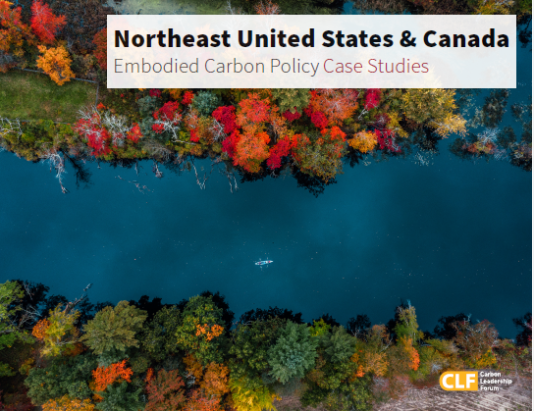
The CLF Northeast Embodied Carbon Policy Case Studies Report highlights nine policies in the Northeast region of the United States and Canada as examples of successfully passed policies targeting embodied carbon reporting and reductions. Join us for a panel discussion with many of the contributors to these policies and hear about the development and adoption process, the stakeholders involved, any challenges faced, and lessons learned for the keys to successful policy adoption and implementation.

Webinar date: April 19, 2024 at 11am PST/2pm EST

Register for the Webinar
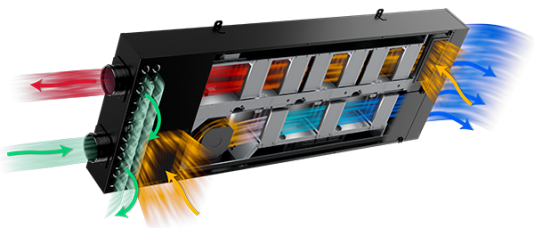
HVAC Revolution: Phononic Transforms Refrigeration with TTAP Installation

by Tony Atti
Phononic Co-founder and CEO

Project Drawdown (Refrigerant Management | Project Drawdown) notes that preventing 100 % of refrigerant leaks over the next 30 years would avoid the emission of 57.15 gigatons of CO2e. It is clear that achieving net-zero building status requires that we develop refrigeration solutions with zero carbon emissions. For many, the complication is not the desire or even alignment behind the broader objective, but rather balancing the trade-offs.  For example, a step down in on-site fossil fuel reliance can translate into a step-up in electricity consumption, which, depending on its energy source, may not be net beneficial to the environment. This challenge drove the team at Phononic forward, seeking to fundamentally change the way the world cools.  

Read the Story

Acerca del Carbon Leadership Forum

Quienes somos

  • The Carbon Leadership Forum accelerates transformation of the building sector to radically reduce the embodied carbon in building materials and construction.
  • We pioneer research, create resources, foster cross-sector collaboration, and incubate member-led initiatives to bring embodied carbon emissions of buildings down to zero.
  • We are architects, engineers, contractors, material suppliers, building owners, and policymakers who care about the future and take bold steps to eliminate embodied carbon from buildings and infrastructure.

www.carbonleadershipforum.org

© Copyright 2024

Foro de liderazgo de carbono

4100 Redwood Rd #20A
Oakland, California 94619-5726
Estados Unidos


You received this message because you subscribed to receive mailings from us, are a member of one of our groups, or have requested information.

Unsubscribe | Forward | Contact us: [email protected]