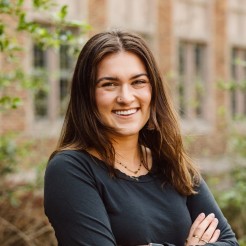
by Meghan Byrne, Engagement and Communications Lead

Find Optimism in Action - why policy is indispensable to meeting US embodied carbon targets

Climate work can feel heavy – especially right now. With the scale of change required, shifting influences, and mounting pressure, it’s easy to lose sight of where progress is happening. But momentum matters, and tangible actions that highlight climate solutions are essential to sustaining it. 

At CLF, we’re working to bring those opportunities to the forefront – showing how today’s solutions can meaningfully reduce embodied carbon and move the built environment towards a more climate-aligned future. 

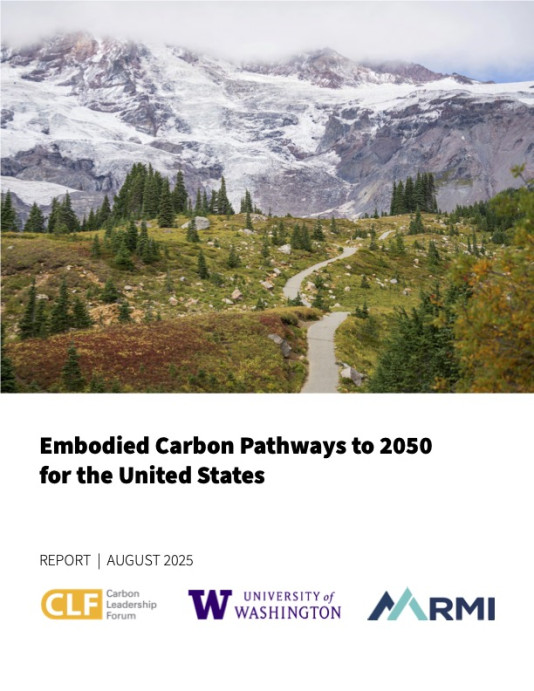
A clear signal of that opportunity comes from The Embodied Carbon Pathways to 2050 for the United States, a collaborative report by CLF, RMI, and the UW Life Cycle Lab. This report offers the most comprehensive analysis to date on the future of US embodied carbon and how embodied carbon emissions could evolve, and be reduced, across US buildings and materials. Rapid decarbonization is essential to meet the emissions reductions required for a 1.5°C-aligned future. With limited time and mounting pushback, prioritizing the highest-impact strategies is critical, and this report identifies a broad set of existing and emerging solutions with immediate potential.

Our analysis shows that a combination of strategies — from material substitution and design optimization to electrification and carbon capture — is essential to achieving the necessary emissions reductions. It also shows that everyone in CLF’s network has a role to play: changes in manufacturing, design, and procurement, supported by private- and public-sector policies and incentives, are key to accelerating the transition to a lower-carbon construction sector. 

We hope this report helps you see embodied carbon reduction not as an abstract challenge, but as a set of concrete opportunities. Dive in, and identify one way these pathways can inform your work — whether you’re shaping policy, specifying materials, or influencing procurement decisions. Progress is already underway, and there’s a role for everyone in moving it forward.

Embodied Carbon Pathways to 2050 for the United States

Embodied Carbon Pathways to 2050 for the United States, a collaboration between the Carbon Leadership Forum (CLF), RMI, and the University of Washington (UW) Life Cycle Lab, provides an assessment of embodied carbon from US construction materials and explores pathways to align with a 1.5°C global warming limit.

This report serves as a call to action, urging the industrial and construction sectors to continue progress towards global targets.

The embodied carbon of key construction materials used in buildings and infrastructure in the United States is significant and requires deployment of a large range of strategies. While challenges remain, existing technologies and strategies can deliver meaningful reductions in the near term. Success will depend on rapid policy action, cross-sector collaboration, and sustained investment in both proven and emerging solutions.

This report was published in August 2025.

Explore the report

Perkins&Will recently published a three-part report - Executive Summary, Context, and Applications in Architecture, and State of the Industry Survey - that explores how regenerative natural materials can reduce carbon and reshape the way we design and construct buildings.

Lee mas

Can cities build their way out of both the housing and the climate crises?

Lee mas

The Massachusetts Embodied Carbon Intergovernmental Coordinating Council (ECICC) released its official recommendations report

Lee mas

Saving a Lifetime of Waste - Deconstruction in Massachusetts introduction video

Lee mas
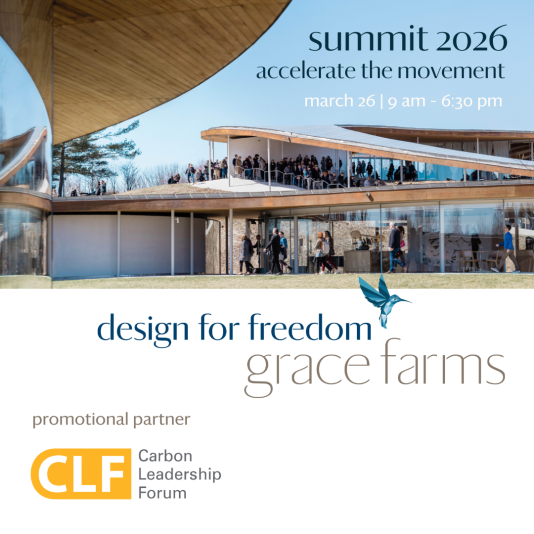
Design for Freedom

Thursday, March 26, 2026, 2pm ET

We are proud to partner with Grace Farms for the 2026 Design for Freedom Summit on March 26, 2026, in New Canaan, CT!

Join us and hundreds of thought leaders, changemakers, and innovators across industries, dedicated to creating a more ethical built environment. Leave inspired and equipped with the tools and vision needed to take immediate action towards more responsible supply chains.

Learn more and Register
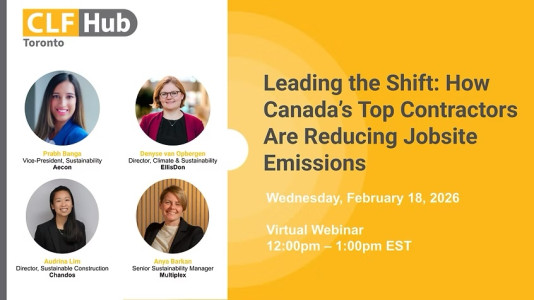
Leading the Shift: How Canada’s Top Contractors Are Reducing Jobsite Emissions

Wednesday, February 18, 12PM EST | Join the CLF Toronto Regional Hub for a webinar featuring speakers Denyse van Opbergen, Audrina Lim, Prabh Banga, and Anya Barkan. 

This session brings the findings of the report Growing and Greening Canadian Construction: Five Ways for Canadian Construction Companies to Build More and Emit Less to life by connecting its most impactful actions to real major projects. Participants will explore how procurement levers, grid-first site setups, and near-term shifts in fuels and equipment can meaningfully reduce emissions without compromising operational excellence.

Learn more and Register
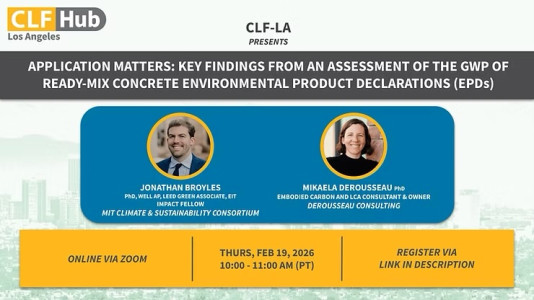
Application Matters: Key Findings from an Assessment of the GWP of Ready-Mix Concrete EPDs

Thursday, February 19, 1PM EST | Join the CLF Los Angeles Regional Hub for a webinar featuring speakers Jonathan Broyles, PhD, WELL AP, LEED Green Associate, EIT, and Mikaela DeRousseau, PhD. 

This webinar will explore the importance and utility of specifying a target application in ready-mix concrete EPDs and convey the key findings from a meta-analysis of the GWP of 47,413 ready-mix concrete EPDs.

Learn more and Register
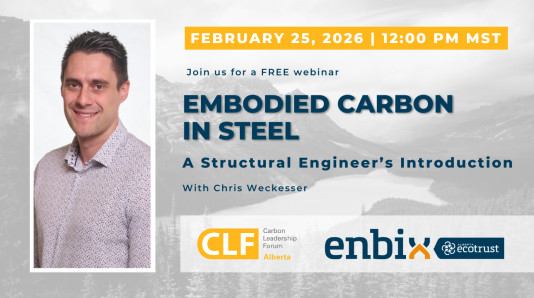
Embodied Carbon in Steel: A Structural Engineer’s Introduction

Wednesday, February 25, 2PM EST | Join the CLF Alberta Regional Hub and ENBIX for a webinar featuring speaker Chris Weckesser. 

Learn the essentials of embodied carbon and its impact on sustainable construction. This webinar covers key concepts, Canadian standards, and practical strategies for reducing carbon in steel projects. Explore EPDs, life-cycle assessments, and design considerations through real-world case studies. Gain actionable insights to meet embodied carbon targets and support a net-zero future.

Learn more and Register
Welcome to CLF, Kristina!

We’re excited to share that Kristina Farrell has joined CLF as a Low Carbon Building Lead! Kristina is focused on driving embodied carbon reduction at the building level through rigorous research and industry collaboration. She has over 10 years of experience in sustainability focused on the built environment. During her career, she has supported federal programs tasked with decarbonizing the construction industry, worked with design teams to optimize projects for embodied carbon reduction, and connected technical expertise to real-world initiatives.

Welcome to CLF, Kristina!
How to Get Involved

Join a growing movement of researchers, policymakers, practitioners, and advocates working to decarbonize the building sector.

Ways to participate:

  • Join the CLF Network – Connect with 10,000+ professionals worldwide

  • Participate in regional CLF hubs

  • Share or submit resources and case studies

  • Attend CLF-hosted events and webinars

  • Advocate for embodied carbon policies in your state

Your voice strengthens the community and accelerates progress.

Visit CLF Website

Acerca del Carbon Leadership Forum

Quienes somos

  • The Carbon Leadership Forum accelerates transformation of the building sector to radically reduce the embodied carbon in building materials and construction.
  • We pioneer research, create resources, foster cross-sector collaboration, and incubate member-led initiatives to bring embodied carbon emissions of buildings down to zero.
  • We are architects, engineers, contractors, material suppliers, building owners, and policymakers who care about the future and take bold steps to eliminate embodied carbon from buildings and infrastructure.

www.carbonleadershipforum.org

© Copyright 2026

Foro de liderazgo de carbono

4100 Redwood Rd #20A
Oakland, California 94619-5726
Estados Unidos


You received this message because you subscribed to receive mailings from us, are a member of one of our groups, or have requested information.

Unsubscribe | Forward | Contact us: [email protected]